
Projects that ship.No surprises.No status soup.
One status, one owner, one date. Working demos every two weeks. Trade-offs in writing before they become invoices.
Three convictions. Every project. No exceptions.
“One status. One owner. One date.”
Every project has a single page where the truth lives. What is in scope, what shipped this week, what is blocked, and the date the next thing lands. No conflicting decks. No four versions of the plan in three tools.
“A working demo beats a polished status report.”
Weekly demos of real software, not slides about software. Stakeholders see progress in the system, not in a chart. The team gets feedback while the work is cheap to change.
“Scope, time, or cost. Pick the one that moves.”
When the work runs hot, we tell you which lever you have. We will not promise all three. The trade-off goes on the page in writing, and leadership decides on the data, not the optimism.
Two ways to know where a project stands. One actually works.
Status across four tools and three decks is not status. The same project, run on a single page of truth, is the difference between a steering meeting and a guessing meeting.
Same project, two steering meetings apart.
Five ways to run a project. Tap one.
Methodology is a tool, not a religion. We pick the smallest process that protects the outcome and the team. Tap one to see how predictability, flexibility, and overhead trade against each other.
Two-week sprints. Working demo at the end.
A planned sprint, a tight backlog, and a demo that actually runs. The team commits to a slice, ships it, and learns. Best for product work where you want feedback before the budget is gone.
Six things we run. Done well.
Discovery & scoping
Two-week scoping sprints that turn a vague ask into a written statement of work, a phased plan, and a number leadership can sign. The plan you can actually defend in front of finance.
Sprint planning & delivery
Backlogs that match the strategy, sprints that the team can finish, and demos that show working software every two weeks. Cycle time and predictability tracked, not guessed.
Risk & dependency management
A live risk register, named owners, and a written mitigation. The risk that becomes the issue is the one no one tracked. We track them, we surface them, and we close them on a schedule.
Stakeholder communication
A weekly written status the leadership team will read in two minutes. RAID log, burn-up chart, the three things that changed. No mystery between standups and steering.
Vendor & resource coordination
Statements of work that hold up under change. Vendor management with real metrics, not just relationships. Resource plans that match what the work actually needs, week by week.
Delivery & rollout
Cut-over plans rehearsed, training built in, and a hypercare period after go-live. Projects do not end at deploy. They end when adoption hits the number we agreed to.
Five phases. No surprises.
Frame
Stakeholder interviews, business outcomes, and a one-page brief everyone signs. Two weeks to a scope the team can actually deliver.
Plan
Phased plan, milestone dates, named owners. Risks logged, dependencies mapped, the budget envelope agreed to in writing.
Run
Sprints, demos, and a single dashboard the steering team opens before the meeting. Trade-offs surface early, decisions get made on data.
Review
Mid-flight retros every quarter. What we learned, what we will change, what we will keep. The plan adapts on purpose, not by surprise.
Land
Cut-over, training, and a hypercare window. The project closes when adoption metrics hit the agreed number, not when the burndown reaches zero.
From Our Blog
Related Insights
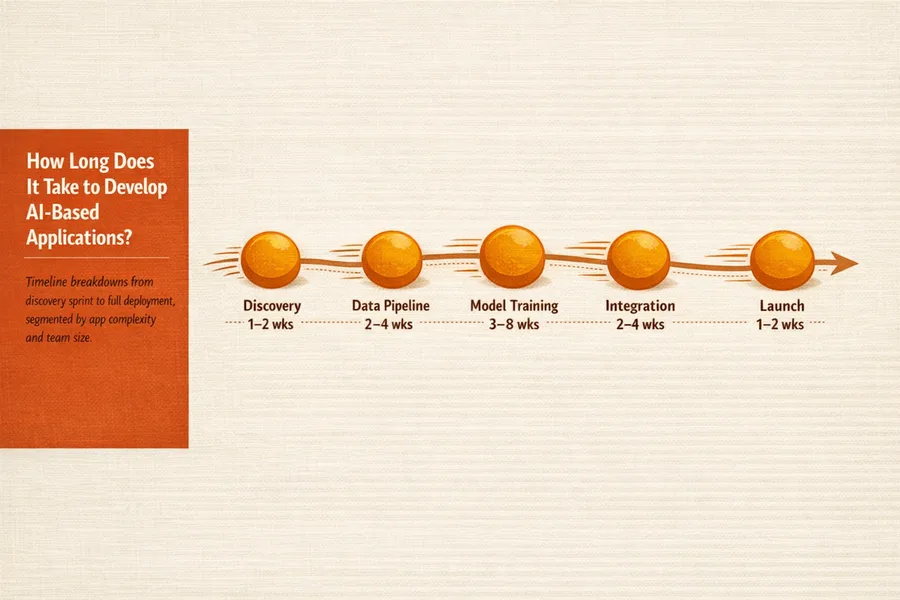


Need ongoing support after launch? Explore our software maintenance and support services
Let’s scope a projectthat finishes on the date you said.
Tell us what the business is trying to ship. In a 30-minute call we will tell you the smallest first milestone we can commit to, and the date you can put on the slide.